


Educational curation has become a central concept for understanding the challenges of teaching today, explains Sergio Bento de Araujo. In a scenario marked by an excess of information, multiple languages, and the rapid circulation of content, effective teaching requires more than simply providing materials or incorporating technological tools. From this perspective, learning gains quality when there is mediation, organization, and pedagogical intention.
In this article, you will understand why curation has become so important, how it influences the construction of knowledge, and how it strengthens the role of the educator in contemporary learning. Read on and learn more!
Why has educational curation become so important?
For a long time, school was seen as one of the main gateways to knowledge. Today, this scenario has changed. Students are surrounded by an enormous amount of information across digital platforms, videos, social networks, apps, and collaborative environments. Access has become faster, but that does not mean the learning process has become simpler. On the contrary, the greater the volume of information, the greater the need to select, contextualize, and organize what truly contributes to the student’s development.
It is precisely at this point that educational curation gains strength, explains Sergio Bento de Araujo. It functions as a process of selection and guidance, helping transform scattered content into more coherent learning pathways. Instead of exposing students to an overwhelming flow of references without criteria, curation builds meaning, sequence, and relevance. Contemporary education depends on qualified mediation capable of articulating technology, research, and methodology with greater clarity and responsibility.
How does mediation strengthen the construction of knowledge?
Pedagogical mediation prevents learning from being reduced to the mere consumption of information. When educators select materials, propose connections, organize topics, and guide critical reading, they help students transform data into understanding. This is a crucial distinction, because accessing content is not the same as learning. As emphasized by Sergio Bento de Araujo, knowledge requires interpretation, comparison, deepening, and reflection—and mediation is a fundamental part of this process.
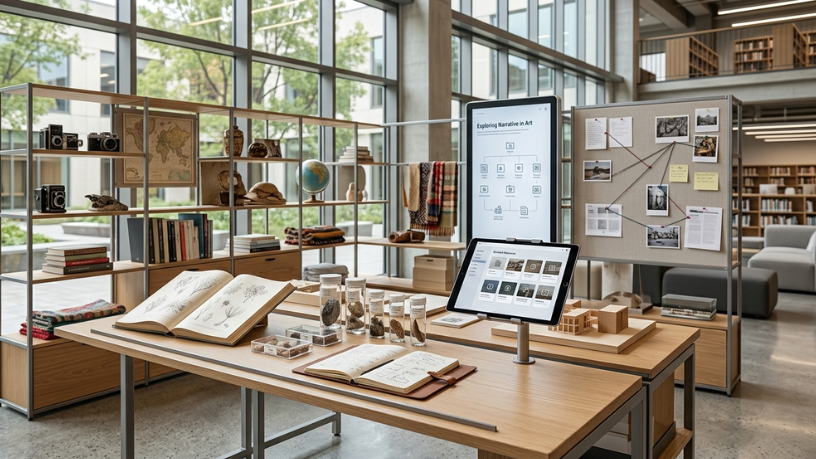
In contemporary learning, this role has become even more strategic, since teachers are no longer just transmitters of content, but facilitators of learning pathways. They help students identify what is reliable, what is relevant, and how different pieces of content can connect with one another. From this perspective, quality education depends less on the accumulation of tools and more on the wisdom with which they are used within a structured educational framework.
Curation, technology, and pedagogical intentionality
The presence of technology has greatly expanded teaching possibilities, but it has also increased the risk of distraction. Platforms, multimedia resources, and search tools are valuable, yet they only produce results when integrated into a well-defined pedagogical logic. Without intentionality, the use of technology can lead to fragmentation, superficiality, and excessive stimulation. With curation, these resources become tools for deepening, investigation, and participation.
For this reason, educational curation does not oppose technology. In fact, it is what gives technology meaning within teaching. By selecting content, defining pathways, and prioritizing objectives, educators transform digital resources into support for learning rather than sources of distraction. As Sergio Bento de Araujo observes, educational innovation must be associated with method, organization, and purpose.
The role of curation in developing more autonomous students
One of the most relevant effects of educational curation lies in the development of autonomy. When students participate in a well-guided process of selecting, analyzing, and organizing information, they learn not only the content itself, but also how to search, compare, and interpret knowledge more critically. This contributes to forming more aware students, capable of dealing with complexity and building their knowledge with greater confidence.
However, this autonomy does not arise from abandonment. It emerges precisely through intelligent guidance. Students become more independent because they are supported by references, criteria, and direction throughout the learning process. Sergio Bento de Araujo reinforces this perspective by emphasizing that quality education should prepare students to think, investigate, and make responsible choices. In this sense, curation does not limit learning—it enhances it by providing a foundation for deeper progress.
Ultimately, this reflects an educational model in which mediation, research, technology, and knowledge move forward together. In contemporary learning, the role of the educator remains essential—not by controlling access to information, but by making it meaningful, relevant, and capable of generating real development.
Author: Diego Rodríguez Velázquez