
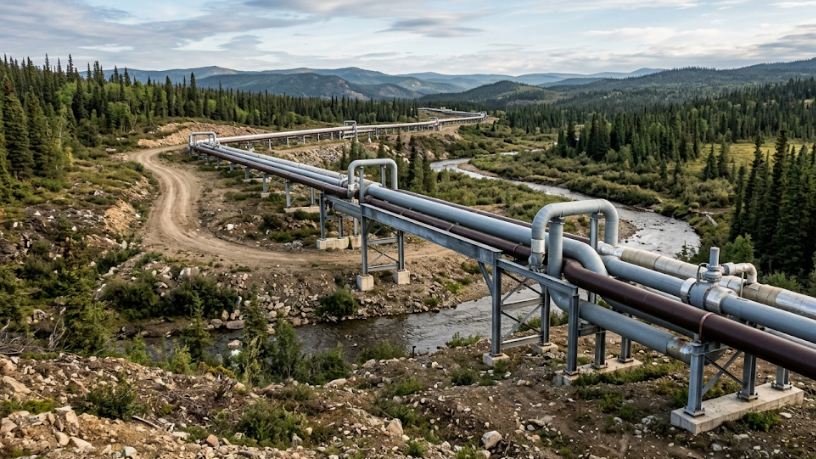

Paulo Roberto Gomes Fernandes, an entrepreneur, links the discussion around above-ground pipelines to an important shift in how modern infrastructure is approached. Instead of treating buried solutions as the automatic answer for every project, part of the engineering field has begun to more carefully evaluate the contexts in which exposed pipelines can offer operational, structural, and logistical advantages. In certain situations, keeping the line accessible does not mean compromising safety.
This perspective has gained traction at a time when the industry places greater value on operational predictability, ease of structural monitoring, and the reduction of future intervention challenges. When a project is analyzed with proper criteria, above-ground pipelines can prove more efficient than buried solutions in specific scenarios.
Read this text through to the end to understand when this alternative makes more sense in infrastructure!
Efficiency depends on context, not a one-size-fits-all formula
In pipeline projects, the choice of system should not follow a rigid logic. Each installation has its own characteristics related to routing, environment, land use, operational requirements, and maintenance routines. Therefore, the efficiency of a solution must be measured by how well it fits the real context of the project. In some cases, burial remains the most appropriate answer. In others, above-ground lines can deliver more consistent long-term performance.
Paulo Roberto Gomes Fernandes notes that this debate becomes more relevant when engineering moves beyond analyzing only the construction phase and begins to consider the system’s full lifecycle. What appears simpler at the initial stage of a project is not always what provides the best operational control later on. When infrastructure requires frequent monitoring and easy technical access, above-ground solutions gain strength as a functional alternative.
More accessible inspection improves line control
One of the main factors that make above-ground pipelines more efficient in certain projects is the ease of inspection. When the pipeline remains visible and accessible, monitoring supports, signs of wear, unwanted movement, friction points, and corrosion effects can be carried out more directly. This reduces the time needed to identify changes and allows for a clearer understanding of the line’s behavior during operation.
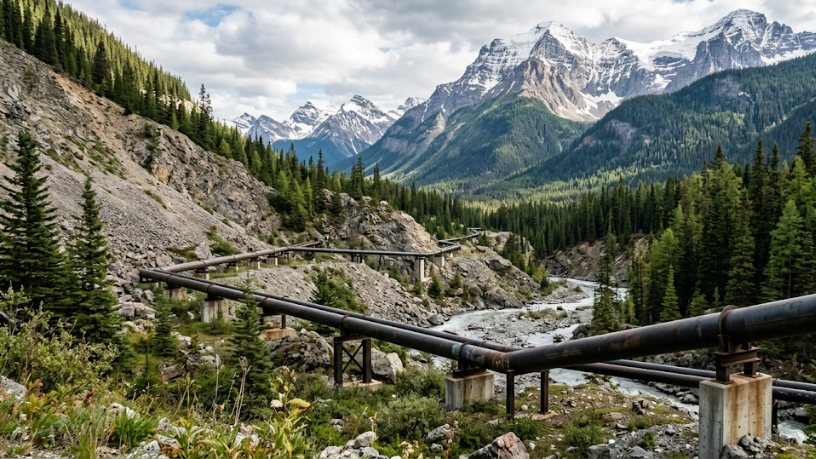
Paulo Roberto Gomes Fernandes explains that this increased visibility has a practical impact on infrastructure management. Instead of relying on indirect procedures or more complex interventions just to assess pipeline conditions, technical teams can act more quickly and accurately.
Maintenance becomes simpler and more predictable
Another key point is maintenance. In buried systems, any technical adjustment, component replacement, or more detailed investigation usually requires excavation, removal of surface layers, and subsequent restoration of the area. With above-ground pipelines, part of this process becomes less complex because the structure is already available for evaluation and intervention.
Paulo Roberto Gomes Fernandes emphasizes that infrastructure efficiency also depends on this ability to intervene without turning every adjustment into a large-scale operation. In projects where performance continuity is just as important as initial construction, the practicality of maintenance can significantly influence the choice of method.
The most efficient choice is the one that best responds to the project
Above-ground pipelines become a more efficient solution when the project demands easier inspection, faster maintenance, continuous technical control, and clear visibility of the structure during operation. This typically occurs in installations where quick access to the line is critical to preserving performance, safety, and integrity. Rather than applying a fixed model to every context, more advanced engineering evaluates which solution best responds to the expected behavior of the infrastructure.
Paulo Roberto Gomes Fernandes concludes that the maturity of the sector lies precisely in recognizing that efficiency does not come from automatic choices. It depends on consistent technical analysis, long-term vision, and adaptation to the real conditions of the project.
Author: Diego Rodríguez Velázquez