
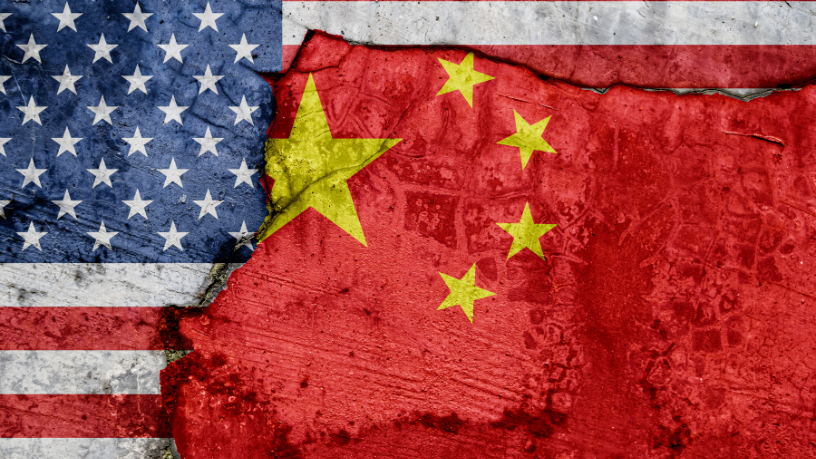

The debate over alleged technology theft from the United States and the circulation of American innovations in China has returned to the center of global geopolitical and economic discussions. This article analyzes how this phenomenon fits into the broader power competition between nations, what it means for the innovation sector, and why intellectual property protection has become one of the most sensitive issues in the digital economy.
The movement of technology across borders has always been part of global industrial development, but the current environment is marked by heightened tension. On one side, companies and governments are increasingly focused on protecting strategic assets linked to artificial intelligence, semiconductors, biotechnology, and digital defense systems. On the other side, there is a growing perception that parts of these technologies are being replicated, adapted, or integrated into other markets, particularly in China, intensifying the race for global technological leadership.
The issue of American technology appearing in China is not limited to isolated incidents. It is embedded in a broader context of industrial competition, where access to advanced knowledge represents economic and geopolitical advantage. In this scenario, the boundary between legal technology transfer, industrial espionage, and reverse engineering becomes increasingly difficult to define, fueling diplomatic and commercial tensions between the two countries.
Globalization has accelerated the circulation of technical knowledge and reduced barriers to entry for emerging markets. Multinational companies operate through distributed supply chains that involve shared processes, licensed patents, and international collaboration. However, this same environment creates vulnerabilities, as technologies developed in countries like the United States can be reproduced elsewhere within different regulatory frameworks.
China, in turn, has evolved from a low-cost manufacturing hub into one of the world’s leading innovation centers. This transformation has been driven by large-scale investments in research and development, long-term industrial policies, and the training of highly skilled human capital. In this process, access to foreign technologies has played a role through commercial partnerships and integration into global production chains.
The central issue is not only the origin of the technology but how it is protected and utilized in a highly competitive environment. The United States and China offer different narratives. American companies frequently argue that intellectual property protection remains difficult in foreign markets, while Chinese authorities emphasize that the country’s technological progress is the result of domestic innovation and industrial adaptation.
This dispute has direct consequences for the global economic balance. Technology is no longer just a sector of the economy but a strategic asset that influences entire systems of power. Leadership in areas such as artificial intelligence, advanced computing, and semiconductor production shapes not only markets but also standards of communication, infrastructure, and national security.
The impact is also visible in corporate strategies. American technology firms have increased data protection measures, export restrictions, and tighter control over international partnerships. At the same time, governments have implemented policies aimed at limiting competitors’ access to sensitive innovations, reinforcing a cycle of technological containment.
This dynamic contributes to a fragmented global technology environment, where separate ecosystems develop in parallel. Instead of a continuous flow of shared innovation, distinct technological blocs are emerging, each with its own standards and strategic priorities. Over time, this may reduce the efficiency of global cooperation in innovation.
From an economic perspective, this situation creates a fundamental tension. Innovation thrives on collaboration, yet geopolitical competition encourages closed systems and stronger protection of intellectual assets. Balancing openness and security has become one of the central challenges of the modern digital economy.
Startups and emerging companies are also affected. In a high-tension technological environment, intellectual property protection becomes more costly, and international expansion more complex. This can slow down innovation cycles, particularly in sectors that depend on global integration to scale.
The discussion around American technology in China should not be understood solely as a bilateral conflict, but rather as part of a broader restructuring of the global innovation system. The competition for technological leadership is reshaping alliances, influencing industrial policy, and redefining how innovation is produced and distributed.
In the long term, technological protection is likely to become even stricter, while global competition in innovation continues to intensify. The key challenge will be finding a balance that allows technological progress without undermining trust among major global actors. The way the United States and China manage this tension will have lasting effects not only on their own economies but on the entire structure of global innovation.
Autor: Diego Velázquez