
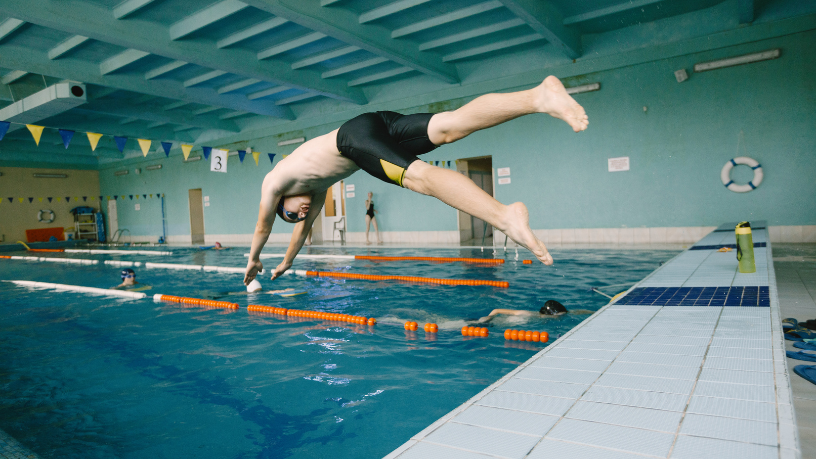

The participation of the United States diving team in the American Cup held in Fort Lauderdale reinforces the country’s position as one of the global powerhouses in the sport. This article analyzes the athletes’ performances, the technical impact of their dives, and what this competition reveals about the evolution of competitive diving worldwide, especially in a cycle leading up to major international events.
The American Cup, held in Fort Lauderdale, has established itself as one of the most important events in the diving calendar. Beyond being a single competition, it serves as a benchmark for elite athlete preparation and highlights technical trends that shape the global competitive landscape. The presence of the United States diving team stood out not only for results but also for consistency and high technical quality across different events.
The U.S. diving team delivered a strong level of execution, with dive routines demonstrating precision, controlled water entry, and high degrees of difficulty. This combination reflects the country’s continuous investment in athlete development, training infrastructure, and long-term specialization programs that start at youth levels.
One of the most significant aspects observed during the competition was the athletes’ ability to maintain emotional stability under pressure. In diving, the difference between a solid performance and a world-class execution often comes down to timing precision and movement consistency. The American team showed competitive maturity by sustaining strong performances in decisive moments, highlighting psychological preparation alongside technical training.
Another key point is the increasing complexity of dives in modern competition. The sport has undergone a major transformation in recent years, with progressively higher degrees of difficulty being introduced into routines. This requires not only strength and flexibility but also near-perfect spatial awareness and body control. The United States team has kept pace with this evolution, incorporating more technically demanding elements while maintaining execution consistency.
The American Cup also functions as a strategic observation platform for coaches and national federations. The performance of the U.S. team indicates a well-structured preparation system where repetition, technical refinement, and detailed movement analysis play central roles. This approach reduces execution errors at the highest level and contributes to consistent results throughout the season.
Beyond technical aspects, the competition highlights the increasing globalization of diving. Athletes from multiple countries are now reaching similar performance levels, raising the overall competitiveness of the sport. In this environment, the consistency of the U.S. team becomes a key differentiator, as small execution errors can determine final rankings.
Fort Lauderdale also plays an important role in this ecosystem by providing high-quality infrastructure for international competitions. The environment supports both performance and preparation, allowing athletes to reach peak conditions during competition.
From an analytical perspective, the United States team’s performance at the American Cup suggests a long-term competitive strategy focused not only on immediate results but on sustained excellence throughout the sporting cycle. The emphasis is not solely on winning a single event, but on maintaining a high execution standard across different competitions and pressure scenarios.
The impact of such performances extends beyond medals. It influences young athletes, reinforces training methodologies, and contributes to the overall evolution of the sport. When a national team consistently performs at a high level in international events, it sets a benchmark that shapes global standards.
In this sense, the American Cup acts as a showcase of excellence. The U.S. diving team’s performance reaffirms its relevance in the global diving scene and highlights the importance of continuous investment in training, technique, and sports infrastructure. The result is a series of performances that not only compete for podium finishes but also help define the direction of the sport itself.
Overall, diving is clearly in a phase of rapid evolution. The combination of increasing technical difficulty and the demand for flawless execution turns every competition into a high-stakes environment. Within this landscape, the United States team remains one of the leading references, demonstrating that sporting excellence is built on discipline, strategy, and long-term consistency.
Autor: Diego Velázquez