
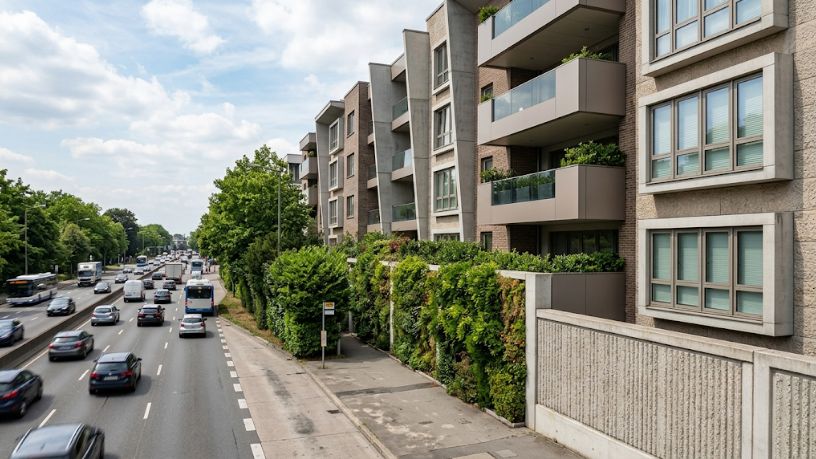

Urban noise is now considered one of the most significant environmental pollutants of modern life. According to Daugliesi Giacomasi Souza, founder of DGdecor, this issue is especially challenging for people who live near major avenues and high-traffic corridors. Estimates from the United Nations Environment Programme link prolonged exposure to excessive noise to approximately 48,000 new cases of ischemic heart disease and thousands of premature deaths each year. Brazil’s NBR 10151 standard establishes maximum noise levels of 55 decibels during the day and 50 decibels at night for residential areas—thresholds that many busy streets in large cities routinely exceed during peak traffic hours.
With that in mind, this article explores architectural solutions that help reduce urban noise, ranging from structural interventions to simple upgrades that can be implemented without any major renovation.
The Impact of Urban Noise on Health
The World Health Organization recognizes environmental noise as one of the leading pollutants affecting modern society, alongside air and water pollution, due to the growing body of evidence linking chronic noise exposure to both physical and mental health problems. Interrupted sleep, elevated stress levels, and increased activation of the nervous system during periods of rest are among the most well-documented consequences of continuous exposure to excessive noise.
As Daugliesi Giacomasi Souza explains, the effects of noise pollution are often underestimated because the human body gradually adapts to background noise without eliminating its physiological impact. People living along busy roads frequently report persistent fatigue and irritability without realizing these symptoms may be directly related to ongoing exposure to outside noise. This highlights why urban noise should be viewed not only as a comfort issue but also as a public health concern.
Structural Solutions That Block Street Noise
Double-glazed windows combined with high-quality rubber weatherstripping can reduce perceived noise levels by as much as 30 decibels in homes located near busy roads. Apartments on lower floors may experience up to a 70% reduction in street noise after these improvements are installed. Brazil’s NBR 15575 residential building performance standard establishes minimum acoustic insulation requirements for walls, floors, and façades, encouraging developers to address soundproofing from the earliest stages of design.
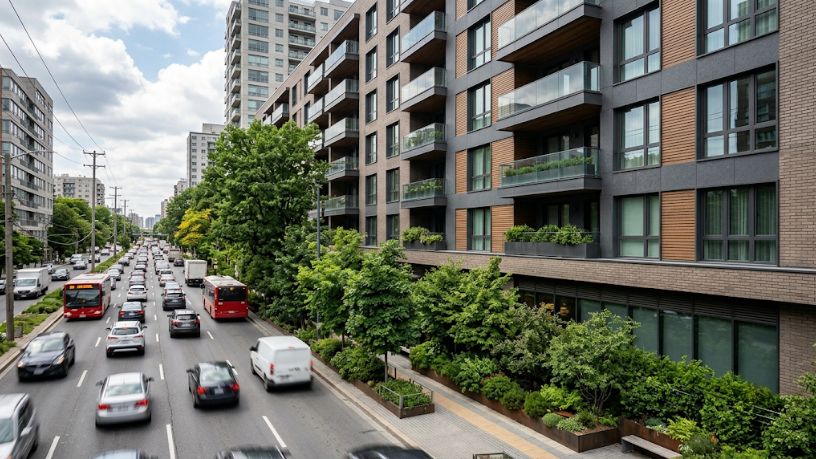
According to Daugliesi Giacomasi Souza, industrialized construction systems—such as cast-in-place concrete walls—eliminate many of the gaps and voids commonly found in conventional masonry construction, reducing what building professionals refer to as acoustic bridges between spaces. Residential developments located along major thoroughfares increasingly incorporate these solutions from the initial design phase, combining enhanced façade insulation with floor plans that position bedrooms farther away from the areas most exposed to traffic noise.
Practical Options for Those Who Cannot Renovate
For renters or homeowners who prefer not to undertake structural renovations, several practical improvements can significantly reduce indoor noise levels. Thick area rugs, full-length heavy curtains, upholstered furniture such as sofas and armchairs, and other soft furnishings help absorb sound that would otherwise reflect off hard flooring and glass surfaces, minimizing indoor reverberation.
From Daugliesi Giacomasi Souza’s perspective as founder of DGdecor, relatively simple sealing improvements—such as installing weatherstripping around doors and windows—can eliminate much of the noise entering through small gaps, often costing only a few hundred dollars per room. More comprehensive options, including acoustic wall panels or specialized soundproofing underlayment for floors and ceilings, require a larger investment and may exceed several thousand dollars per room, but they remain a practical alternative to a full-scale structural renovation.
Why Acoustic Insulation Should Be Planned From the Start
Improving sound insulation after a building has already been completed is typically far more expensive than incorporating it during the architectural design process. Positioning bedrooms on the quieter side of the building, selecting construction systems with superior natural acoustic performance, and specifying appropriate glazing and sealing materials from the beginning help eliminate costly retrofits later.
As Daugliesi Giacomasi Souza points out, evaluating these technical features before purchasing a property on a busy avenue is just as important as reviewing the floor plan or square footage. A thoughtfully designed building with effective acoustic planning allows residents to enjoy the convenience of a vibrant urban location without sacrificing restful sleep or the peace and quiet necessary for true relaxation. Before purchasing a property facing a heavily traveled street, buyers should verify whether the developer actually implemented these acoustic solutions rather than simply advertising soundproof comfort in promotional materials.