

Weak hiring numbers are raising new questions about the future of work, as businesses continue investing heavily in artificial intelligence despite a cooling labor market.
The latest U.S. employment data has sparked fresh debate about where the American economy is heading. Hiring slowed significantly in June, prompting economists, Federal Reserve officials, and business leaders to reassess expectations for growth, inflation, and interest rates. At the same time, companies continue pouring billions of dollars into artificial intelligence, automation, and digital infrastructure, creating an unusual economic moment where investment remains strong even as job creation loses momentum. (Reuters)
For many Americans, the biggest question is no longer whether AI will reshape the workplace—it is how quickly that transformation will occur and which industries will feel it first. While a weaker labor market often raises concerns about layoffs or slower wage growth, the current environment is more complicated. Employers are still spending aggressively on technology that promises long-term productivity gains, even as they become more cautious about expanding their workforce. Understanding why these trends are happening together helps explain what workers, businesses, and consumers should expect over the coming months.
Why are companies investing in AI even as hiring slows?
At first glance, slower hiring and record technology investment appear contradictory. Traditionally, businesses expand payrolls when they are optimistic about future demand. Today, however, many executives see artificial intelligence as a way to increase output without increasing headcount at the same pace. Rather than replacing every worker, AI is increasingly being used to automate repetitive tasks, assist employees, improve customer service, and streamline operations across industries.
Federal Reserve officials have acknowledged that AI is becoming an important factor in the broader economy. Recent comments from policymakers suggest that strong investment in AI infrastructure could boost productivity while also creating uncertainty about inflation, wages, and future economic growth. Because AI can increase both demand for technology and the economy’s productive capacity, policymakers are still evaluating how these competing forces will affect future interest-rate decisions. (Reuters)
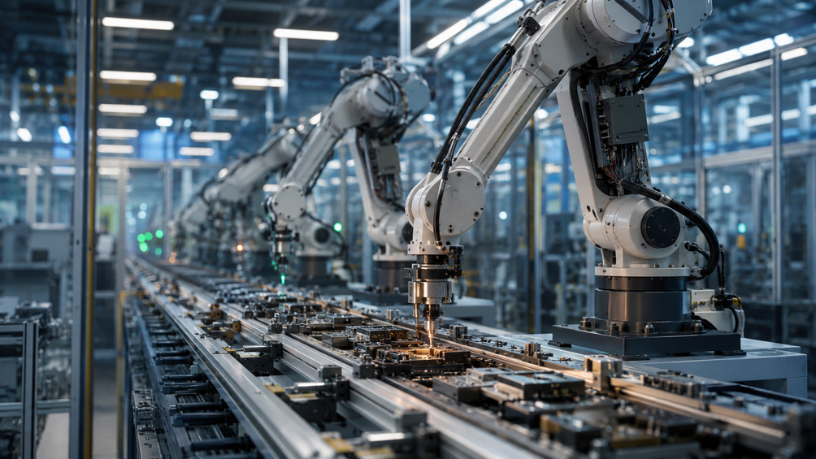
This investment cycle extends far beyond Silicon Valley. Healthcare providers are adopting AI-assisted diagnostics. Manufacturers are expanding automation to improve efficiency. Financial institutions are using machine learning to detect fraud and improve customer support. Retailers are deploying AI to manage inventory and personalize shopping experiences. Even small businesses increasingly rely on AI-powered software for marketing, accounting, scheduling, and customer communication. Instead of treating AI as an experimental technology, many organizations now view it as essential business infrastructure.
What does a slower job market mean for American workers?
For employees and job seekers, weaker hiring does not necessarily signal widespread job losses. Instead, it often means that companies become more selective when filling open positions. Businesses may delay new hiring, consolidate responsibilities among existing staff, or prioritize candidates with digital and AI-related skills over those with more traditional qualifications.
This changing environment places greater emphasis on adaptability. Workers who understand data analysis, AI tools, cybersecurity, cloud platforms, and digital collaboration are likely to find expanding opportunities, even during periods of slower overall hiring. Many employers increasingly value candidates who know how to use AI to improve productivity rather than viewing the technology as a replacement for human expertise.
At the same time, entry-level positions could become more competitive in some industries. As AI handles routine administrative work, employers may reduce demand for certain repetitive roles while increasing demand for positions involving creativity, decision-making, relationship management, technical oversight, and problem-solving. Similar concerns have emerged internationally, where analysts have warned that AI could reshape the availability of traditional entry-level work over the next several years. (The Guardian)
The future of work therefore appears less about wholesale job elimination and more about job evolution. Workers who continuously update their skills may benefit from higher-value responsibilities, while those relying on easily automated tasks could face increasing pressure to adapt. This shift also highlights the growing importance of lifelong learning, employer-sponsored training, and accessible workforce development programs.
What should consumers, businesses, and policymakers watch next?
Several developments will determine whether today’s slowdown becomes a temporary pause or a longer economic transition. Future employment reports will show whether hiring stabilizes or continues weakening. Inflation data will influence Federal Reserve decisions on interest rates. Corporate earnings will reveal whether businesses maintain their aggressive pace of AI investment despite economic uncertainty.
For consumers, slower hiring may eventually affect spending patterns, housing demand, and borrowing costs. If inflation continues easing while economic growth remains moderate, interest rates could eventually move lower, improving affordability for mortgages, auto loans, and business financing. However, policymakers remain cautious because AI-driven productivity gains may change the traditional relationship between employment, wages, and inflation in ways economists are still trying to understand. (Reuters)
Businesses will also face strategic decisions beyond technology adoption. Successful organizations will likely invest not only in AI systems but also in employee training, cybersecurity, data governance, and responsible implementation. Companies that combine automation with workforce development may gain competitive advantages while maintaining employee trust and customer confidence.
Looking ahead, the biggest story is unlikely to be a single monthly jobs report. Instead, it is the broader transformation of the American economy as artificial intelligence becomes embedded across nearly every industry. The pace of hiring, the evolution of workplace skills, and continued investment in digital technologies will shape how this transition unfolds. For workers, employers, and policymakers alike, the coming months will offer important clues about whether AI becomes primarily a productivity engine, a labor market disruptor, or—most likely—a combination of both.