
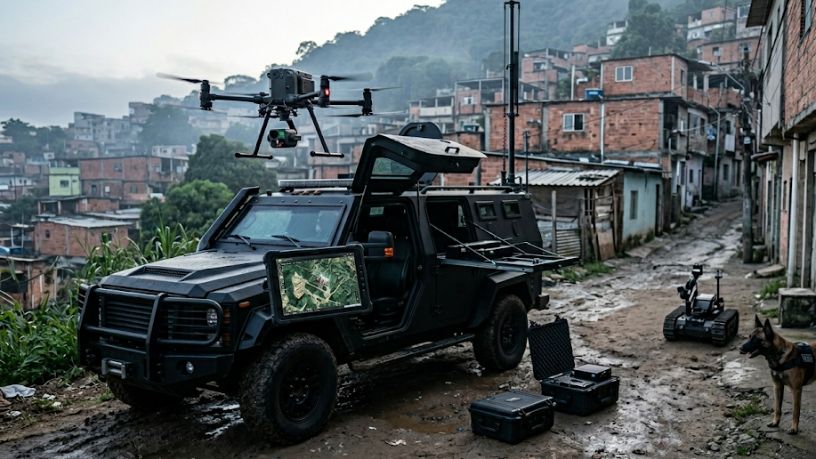

Brazil is undergoing a period of profound transformation in its public security training models. Ernesto Kenji Igarashi points out that there is a significant difference between holding a command position and genuinely exercising leadership.
As Brazilian security forces operate under increasing pressure in ever more complex, multifaceted environments subject to intense public scrutiny, the question of how to develop police leaders capable of guiding teams with efficiency, ethics, and genuine authority has moved to the center of the sector’s strategic debate. This discussion now extends far beyond traditional concerns about budgets, equipment, or organizational structures.
Continue reading to discover why leadership development in public security represents one of the main strategic bottlenecks within the Brazilian system and which competencies the world’s most advanced training programs have already incorporated to overcome this challenge.
Which attributes are essential for successful police leadership beyond technical knowledge?
One of the most persistent misconceptions within public security organizations is treating hierarchical promotion as an automatic indicator of leadership capability. Reaching a higher rank grants formal authority, but it does not necessarily provide the ability to mobilize teams under adverse conditions, make rapid decisions with incomplete information, or create institutional environments that foster collective performance.
Effective police leadership requires a set of attributes that goes far beyond technical expertise and knowledge of operational procedures. Ernesto Kenji Igarashi explains that the central issue is that traditional training programs rarely measure or systematically develop these attributes.
What examples demonstrate the effectiveness of the four dimensions in successful leadership programs?
The most effective public security leadership development programs currently available are based on a broader competency model that integrates four fundamental dimensions: technical, cognitive, relational, and ethical. The technical dimension is the most developed in Brazil, encompassing knowledge of protocols, legislation, operational communication, and incident response procedures. The remaining dimensions, however, still receive far less attention than their actual importance to operational performance would warrant.
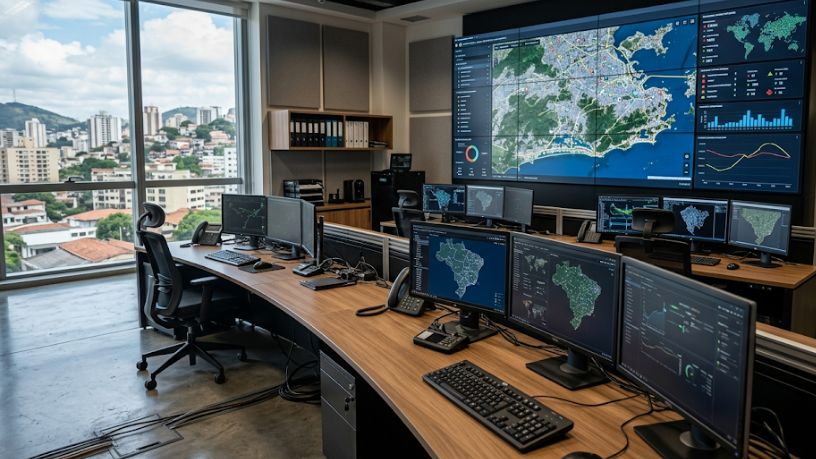
The cognitive dimension involves rapid situational analysis, decision-making under pressure, and uncertainty management. Ernesto Kenji Igarashi emphasizes that in contemporary public security operations—where situations can change within seconds and available information is always incomplete—a leader who has not developed this dimension tends to react instinctively rather than make strategic decisions, ultimately compromising operational efficiency and the safety of the entire team.
What are the main benefits of emotional intelligence in day-to-day operations?
Cultural resistance to addressing emotional intelligence within security organizations remains significant in Brazil. However, international data on operational performance and talent retention have made this discussion impossible to ignore. Security forces that invest in the emotional development of their leaders report lower rates of failure in critical operations, reduced personnel turnover, and stronger collective mental health indicators.
This is not a theoretical debate disconnected from operational reality. A leader’s ability to regulate their own emotional state during crises, recognize signs of overload among subordinates, and communicate difficult decisions with clarity and composure directly influences measurable operational outcomes.
American specialized units transform leadership training through continuous feedback
Security organizations such as Scotland Yard, the Colombian National Police, and specialized American units have long adopted leadership models based on continuous learning and multidirectional evaluation, in which leaders are regularly assessed by peers, subordinates, and superiors.
This feedback cycle creates a culture of continuous improvement that breaks away from the static logic of traditional hierarchies. What these models demonstrate is that leadership development does not end upon reaching a specific rank. By definition, it is an ongoing process that evolves with every new operational context.
Ernesto Kenji Igarashi explains that, when comparing Brazil’s reality with these international examples, the primary obstacle is neither financial nor logistical. The main bottleneck lies in the organizational culture of security institutions, which still tends to interpret continuous leadership development as a sign of weakness rather than recognizing it as an indicator of institutional maturity.
Collaborative leadership: the path to effectiveness in public security
Technological acceleration, the increasing sophistication of threats, and changing societal expectations regarding security forces are reshaping the profile of the police leader needed for the coming years. It is no longer enough to be efficient in managing current operations. Leaders must build teams capable of adapting to constantly changing scenarios, incorporating new tools without losing cohesion, and maintaining institutional integrity in the face of pressures that are likely to intensify rather than diminish.
Ernesto Kenji Igarashi notes that the leadership development programs most likely to succeed during this transition will be those capable of balancing technical rigor with human development, operational discipline with adaptive intelligence, and hierarchical authority with a genuine ability to influence and inspire teams.
Author: Diego Rodríguez Velázquez