
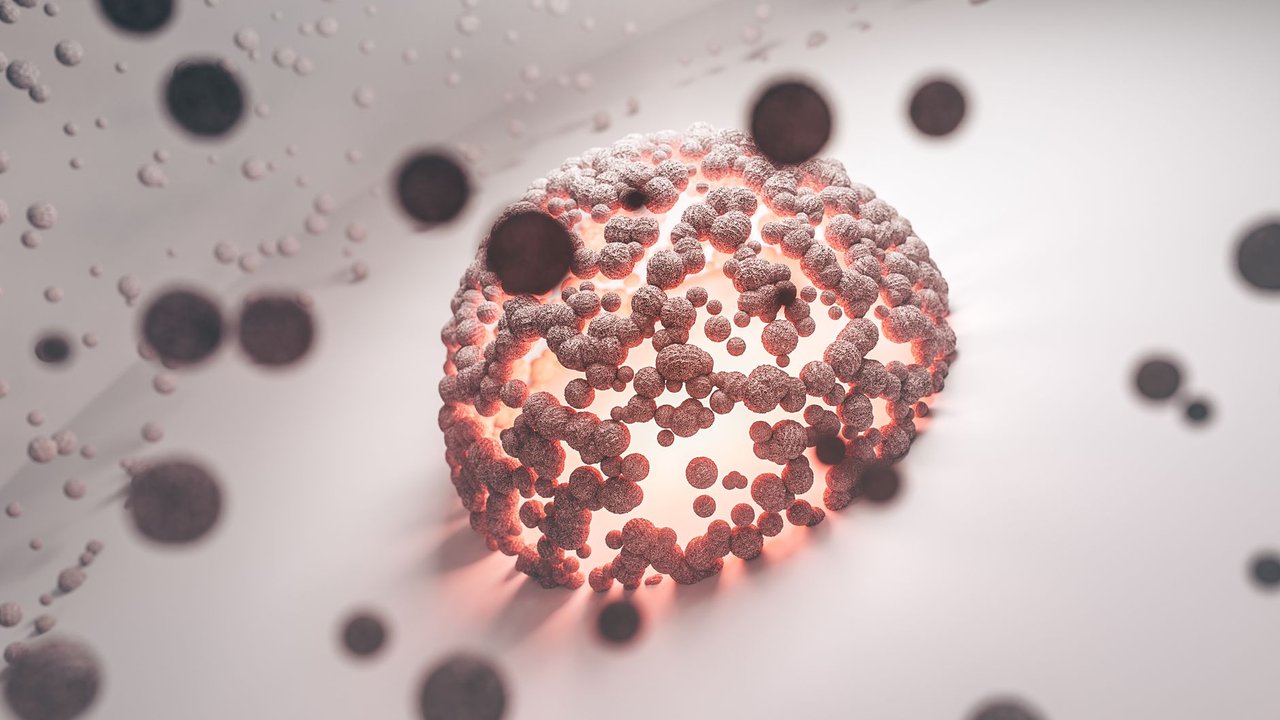

The United States government announced on October 8, 2026, a $1.8 billion initiative to create data infrastructure and computational models for what researchers describe as virtual cells. The project, known as Bio Genesis, brings together the National Institutes of Health, the Department of Energy and Biohub as part of a broader federal push to expand the use of advanced computing in science and medicine.
The announcement was included in a package of scientific initiatives presented by the White House during the “Science: A New Golden Age” event. According to the White House, Bio Genesis is intended to establish a foundation for biomedical research based on large-scale biological data, computational modeling and artificial intelligence.
What virtual cells are designed to do
Virtual cells are not necessarily exact digital copies of human cells. Instead, the concept refers to computational representations that combine biological information with mathematical models and artificial intelligence to estimate how cells or biological systems may behave under different conditions.
Researchers could use these models to study disease mechanisms, test scientific hypotheses and examine how cells might respond to medicines or environmental changes. The goal is to make certain stages of research faster and more predictive, while helping scientists identify promising questions before moving to more resource-intensive laboratory work.
In practice, the quality of a virtual cell depends on the data used to build it, the computing systems available to process that information and the ability of researchers to validate the model against real biological observations. A model can organize and predict complex interactions, but it does not eliminate the need for experimental research or clinical evaluation.
A broader U.S. strategy for biomedical computing
The initiative places biological modeling within a wider American strategy focused on artificial intelligence, high-performance computing and scientific infrastructure. Rather than centering on a single medicine or commercial product, Bio Genesis is presented as a platform intended to support research across universities, laboratories, pharmaceutical development and biotechnology.
The scale of the proposed investment also signals that computational biology is being treated as a strategic area of national science policy. By combining federal health and energy agencies with an independent research organization, the project is expected to connect biomedical datasets, computing resources and modeling capabilities that are often distributed across different institutions.
This approach could be particularly relevant to medicine, where researchers must account for complex interactions between genes, proteins, cells, tissues and treatments. More capable models may help scientists compare biological scenarios and prioritize experiments, although the practical results will depend on how the infrastructure is built and how widely researchers can access it.
Connection with human-based research
The Bio Genesis announcement comes as the NIH expands investments in research infrastructure and technologies based on human biological systems. In a separate update, the National Institutes of Health described investments involving organoids, robotics, artificial intelligence and other tools designed to advance human-based biomedical research.
That context helps explain how virtual cell modeling may fit into the changing research landscape. Computational simulations can complement organoids, laboratory measurements and other human-based systems by allowing scientists to integrate different types of evidence. They may also help researchers analyze patterns that would be difficult to evaluate through isolated experiments.
However, the federal initiative does not mean that a complete or universally accurate digital human cell already exists. Biological systems are highly variable, and cells can react differently depending on their genetic background, environment, developmental state and interaction with other cells. These factors create technical challenges for any model designed to predict biological outcomes.
Potential impact and next steps
If implemented as described, the infrastructure could influence several stages of biomedical research, including early disease studies, drug discovery and the development of more personalized therapies. Faster computational analysis could help laboratories narrow down possible interventions and better understand why a treatment may work in one biological context but not another.
The initiative may also encourage closer collaboration between biologists, data scientists, software developers and specialists in high-performance computing. That collaboration will be important because virtual cell systems require more than algorithms: they also need standardized data, reliable evaluation methods, secure infrastructure and clear procedures for interpreting predictions.
For now, the announcement establishes the direction and scale of the U.S. effort, rather than delivering a finished virtual cell platform. Its long-term significance will depend on the quality of the underlying data, the transparency of the models and the ability of researchers to verify computational predictions through biological experiments. Even with those limitations, the Bio Genesis plan places virtual cell research at the center of the country’s next phase of technology-driven biomedical science.