
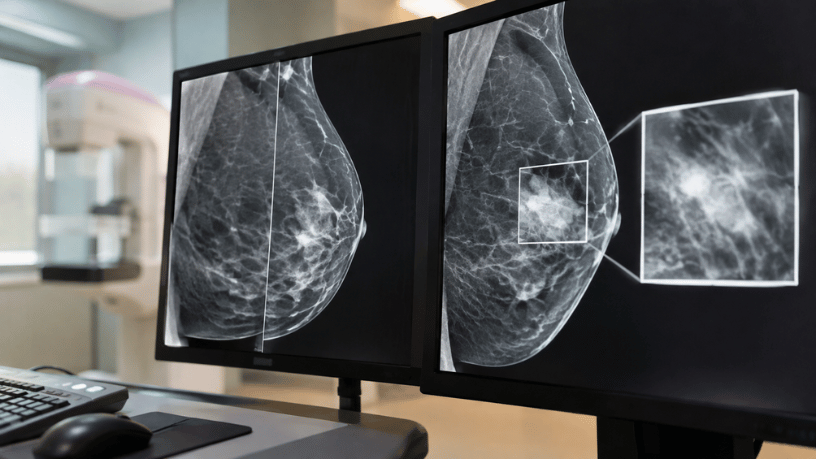

Radiologist Vinicius Tadeu Sattin Rodrigues points out that the idea that requesting a second reading means distrusting the first professional is one of the most common misconceptions among patients. The same imaging examination can be interpreted by two different radiologists, and this is part of the routine quality assurance procedures in many healthcare facilities. The term may sound alarming because it suggests disagreement, but it actually describes a verification step, similar to an editor reviewing a text already written by a skilled author.
A mammogram, CT scan, or MRI does not provide ready-made answers. It consists of shapes, contrasts, and densities that must be interpreted by someone who understands what is normal and what requires attention. Two trained professionals may assess the same area differently, especially when a finding is subtle. The purpose of a second reading is to reduce this margin of uncertainty, not to assign blame.
What Is a Second Reading and When Does It Take Place?
A second reading is the reassessment of an imaging examination by another professional, performed either independently or with access to the initial report, depending on how the healthcare facility operates. In mammography screening programs, for example, it is common for images to be reviewed by more than one specialist before the results are delivered to the patient. In other situations, a second reading takes place because the attending physician wants an additional opinion regarding an uncertain finding.
It may also happen when a patient changes healthcare providers and takes the images to another specialist. In such cases, comparing the images with previous examinations is often particularly helpful, as many changes only become meaningful when their appearance months or years earlier is considered. A small area that appears suspicious in an isolated image may prove to be stable when compared with an earlier examination.
Does a Second Opinion Mean the First Radiologist Was Wrong?
In most cases, no. A second reading usually confirms what has already been described, and when differences arise, they rarely involve a major error. More often, the disagreement concerns the degree of concern: for example, one professional may classify a finding as probably benign, while another may recommend closer monitoring.
According to Vinicius Tadeu Sattin Rodrigues, the central point is understanding that imaging has limitations and that interpretation involves clinical judgment. Imaging has limitations, and interpretation requires clinical judgment, which means that examinations are most effective when supported by established methods, comparisons, and communication between professionals. Understanding this helps patients move away from viewing a report as a final verdict and instead recognize their role in an ongoing healthcare process.
When Is It Worth Requesting Another Reading?
There are situations in which discussing a second opinion makes sense: when a report contains an unclear finding, when the recommendation seems disproportionate to what has been described, or when the patient needs to make a decision about a significant procedure, such as a biopsy. In these circumstances, the most useful first step is to speak with the physician who requested the examination, as this professional knows the patient’s complete medical history and can recommend the appropriate course of action.
Requesting a second reading without consulting the physician overseeing the case often creates confusion. The patient may receive two reports using different terminology without anyone available to explain what each one means. Ideally, therefore, the request should be accompanied by a specific question about what needs clarification rather than a general sense of distrust. This approach saves time and reduces anxiety.
Understanding Differences Between Readings
As Vinicius Tadeu Sattin Rodrigues explains, minor differences between two interpretations do not mean that either professional has failed. They demonstrate that an image may allow more than one reasonable interpretation and that the challenge lies in choosing the safest course of action. When the difference is significant, the usual approach is for the specialists to discuss the case and, if necessary, recommend an additional examination, such as an ultrasound or MRI.
What deserves attention is the clarity of the final report. A good report explains what was observed, what the findings may mean, and which next steps are recommended, without leaving the patient to guess. If the wording is unclear, asking questions is a patient’s right, and requesting an explanation in simple language often resolves much of the anxiety. At this stage, communication is just as important as the images themselves.
Useful Questions to Ask During a Medical Appointment
Patients preparing to discuss an imaging report can bring a few straightforward questions. It is worth asking whether the finding requires monitoring or another examination, within what timeframe, and whether previous examinations could help with the comparison. It is also reasonable to ask whether the healthcare facility performs double readings in uncertain cases, as the answer provides insight into how its quality assurance procedures work in practice.
Another common question is whether the result changes the treatment or follow-up plan. Sometimes, a second reading confirms that the original plan should remain unchanged, which is already valuable information: it reduces uncertainty without creating the need for additional procedures. In other cases, it may lead to an adjustment in the follow-up interval. In every situation, decisions should be made jointly by the patient and the attending physician, based on the complete clinical picture, and never on a single report interpreted out of context.
What Does a Second Reading Not Do?
A second reading does not guarantee that nothing will be overlooked, because no diagnostic method is infallible. It also does not replace a clinical examination or a discussion with the attending physician. Nor should it be used to keep searching until a desired answer is obtained, a practice that only increases uncertainty and consumes time that could otherwise be devoted to appropriate care.
When understood in this way, a second reading is what it has always been: a discreet safety mechanism adopted by many healthcare facilities to provide patients with more reliable results. According to radiologist Vinicius Tadeu Sattin Rodrigues, patients who understand this no longer see the request as a challenge to the first professional’s competence, but rather as part of a well-organized healthcare process in which multiple specialists work toward the same goal.