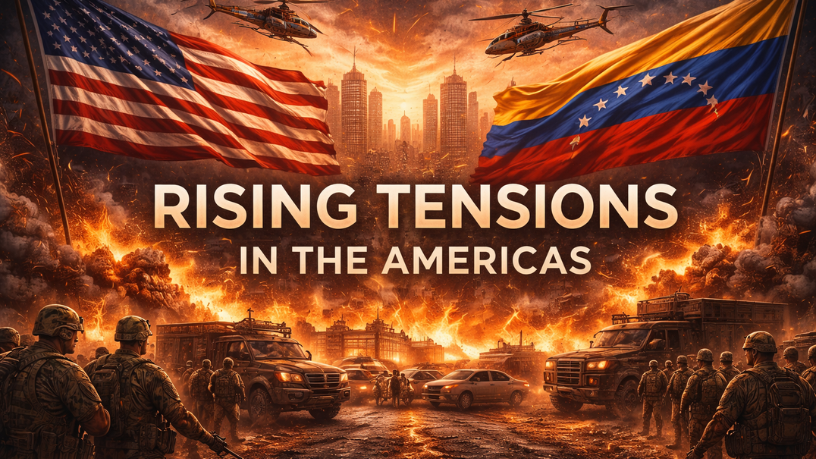

Rising Tensions in the Americas have drawn international attention as developments involving the United States and Venezuela signal a new phase of geopolitical strain. In early 2026, reports of unusual activity and security alerts in Caracas intensified concerns about stability in the region. Rising Tensions in the Americas reflect a broader pattern of diplomatic pressure, strategic messaging, and heightened alertness on both sides. The situation has moved quickly from background diplomatic friction to a matter of public and regional concern. Governments, analysts, and observers are closely monitoring signals coming from both capitals. The evolving context suggests a moment of uncertainty with potential regional consequences.
At the center of Rising Tensions in the Americas is the fragile relationship between United States and Venezuela, marked by years of political disputes, sanctions, and mutual distrust. Recent developments have raised questions about security, sovereignty, and the limits of diplomatic engagement. Rising Tensions in the Americas illustrate how quickly localized events can escalate when historical grievances remain unresolved. Statements and actions taken by both governments are being interpreted not in isolation, but as part of a longer trajectory of confrontation. This dynamic increases the risk of miscalculation. The atmosphere remains tense as both sides assess their next moves.
Rising Tensions in the Americas have also highlighted the role of military readiness and intelligence signaling. Reports of heightened alert levels and unusual sounds or movements in Caracas have fueled speculation about internal security operations and external pressure. Rising Tensions in the Americas demonstrate how uncertainty can amplify public anxiety, particularly in environments already marked by economic and political stress. Governments often use ambiguity strategically, but it can also deepen instability. The lack of immediate clarification has contributed to widespread concern. Regional actors are watching carefully for confirmation or escalation.
From a diplomatic perspective, Rising Tensions in the Americas underscore the fragility of communication channels. Formal dialogue between Washington and Caracas has been limited, increasing reliance on indirect messaging and public statements. Rising Tensions in the Americas show how the absence of sustained diplomatic engagement can magnify the impact of isolated incidents. Without clear lines of communication, rumors and speculation gain traction. This environment complicates efforts to de-escalate. Diplomacy, when constrained, becomes reactive rather than preventive.
Rising Tensions in the Americas are not confined to bilateral relations alone. Neighboring countries and regional organizations are assessing potential spillover effects, including migration pressures and economic disruption. Rising Tensions in the Americas remind policymakers that instability in one nation can reverberate across borders. The situation has renewed discussions about regional security frameworks and crisis management mechanisms. Allies and partners are evaluating their positions carefully. The broader hemispheric context adds complexity to every development.
Media coverage has played a significant role in shaping public understanding of Rising Tensions in the Americas. Live updates, security alerts, and rapidly circulating information have created a sense of immediacy. Rising Tensions in the Americas illustrate how modern news cycles can intensify perceptions of crisis. While timely reporting is essential, it also increases the challenge of separating verified facts from preliminary signals. The demand for constant updates places pressure on both governments and journalists. Information management has become part of the strategic landscape.
Rising Tensions in the Americas also raise questions about domestic politics within both countries. External confrontation often intersects with internal challenges, influencing public opinion and political decision-making. Rising Tensions in the Americas show how leaders may face incentives to project strength during moments of uncertainty. This interplay between domestic legitimacy and foreign policy complicates resolution efforts. Internal dynamics can limit flexibility. Political calculations are now closely tied to diplomatic posture.
Ultimately, Rising Tensions in the Americas represent a critical juncture in inter-American relations. The coming weeks will be decisive in determining whether the situation stabilizes or escalates further. Rising Tensions in the Americas serve as a reminder of how quickly geopolitical balance can shift under pressure. The outcome will depend on restraint, communication, and strategic clarity. As developments continue to unfold, the region remains on alert. The situation stands as a test of diplomacy in an increasingly polarized global environment.